

What You'll Learn
A salon has more built-in moments to ask for a Google review than almost any other local business. A client sits still for thirty to ninety minutes, watches the result happen in a mirror in real time, and usually leaves looking and feeling better than when they walked in. And yet most salons and barbershops still end up with a thin trickle of reviews, a stale profile, and a stylist or two who's quietly frustrated that their best work never shows up anywhere a new client can find it.
This guide walks through why that gap exists and exactly how to close it: when to ask depending on the service, how to route the request to the actual stylist who did the work instead of a generic "the shop" account, how to time the follow-up text so it lands after the client has had a real chance to love the result, and how to keep asking regulars without it turning into spam. None of it requires new software or a marketing budget. It requires a process that runs the same way every time, for every stylist, on every kind of appointment you book.
Why This Matters for Your Business
Most salons and barbershops aren't short on happy clients. They're short on a system for turning "I love it!" into a Google review before that feeling fades on the drive home. The shop's Google Business Profile is usually the first thing a new client sees when they search "barbershop near me" or "best balayage in [town]," and a profile sitting at 30 reviews next to a competitor's 200 reads as a coin flip not worth taking when there's a safer-looking option two doors down.
There's also a second layer most shops miss entirely: in a salon, the reviews don't just sell the shop, they sell the individual stylist. A client picking a new colorist doesn't just check the shop's star rating; they look for a name they recognize, a specific result they can see in a photo, a review that mentions "ask for Jamie." If your shop's reviews are all generic and unattributed, you're leaving the exact signal that fills a specific stylist's chair sitting on the table.
That matters even more in shops where stylists rent their own booth. A booth-rental stylist's income depends entirely on their own bookings, not the shop's collective reputation, so a review system that only benefits "the shop" gives an independent stylist little reason to care about it. The fix isn't a bigger ask. It's a more specific one, built around when each service actually peaks and who actually did the work.
Step 1: Map the Peak-Satisfaction Moment for Each Service You Offer
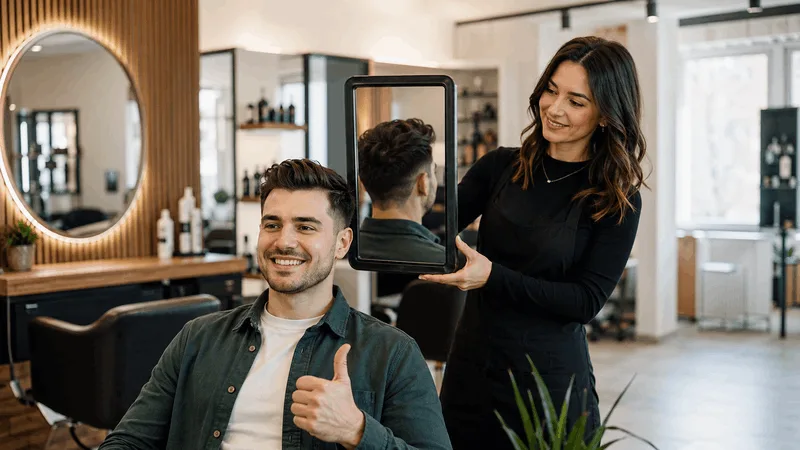
A barbershop trim and a full balayage don't earn the same review at the same moment, because the client isn't actually happy at the same moment. A quick cut peaks the second the client sees it in the mirror, before they've even paid. A color or chemical service peaks a day or two later, once the client has washed and styled it themselves at home and confirmed it holds up outside the salon chair.
Write down every service you offer and put a rough peak-satisfaction window next to each one. A men's cut or beard trim: right now, before they leave the chair. A blowout or simple trim: same day, within a couple of hours. A color, perm, or any multi-step service: a day or two later, after the first home wash. A big-occasion style, like a wedding or prom updo: that night or the next morning, once the photos start coming back from the event.
This list doesn't need to be exact. It needs to exist, because every step after this one depends on it. Asking a color client for a review the moment they walk out the door catches them before they know if the color survives a shower, and asking a quick-cut client a day later means you've already lost the moment they were most excited.
Step 2: Make the Ask Part of Checkout, Not an Afterthought
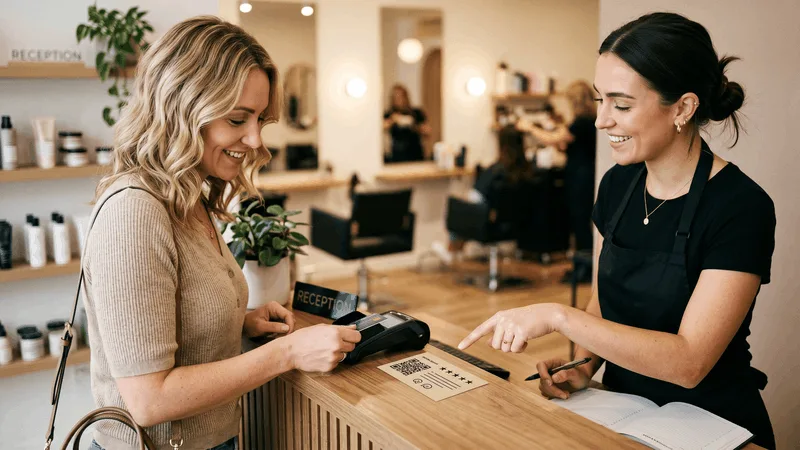
The services that peak immediately, like a barbershop cut, deserve an ask that happens before the client leaves the building. A small card at the register, or a code at each individual styling station, gives a client something to scan while they're still standing there, phone already in hand, paying for the visit. Setting one up takes about fifteen minutes and costs nothing.
The key difference in a salon: put one at every station, not just the front register. A client who had a great experience with a specific stylist should see that stylist's prompt while they're still sitting in that stylist's chair, not a generic shop-wide sign they walk past three minutes later on their way to pay someone else.
For services that peak later, checkout still matters, just not as the only ask. Tell the client at checkout that you'll follow up with a quick link once they've had a chance to live with the color for a day or two. That single sentence sets the expectation so the text that arrives later feels like a planned follow-up instead of a random message from a number they don't recognize.
Step 3: Route Every Request to the Stylist Who Did the Work
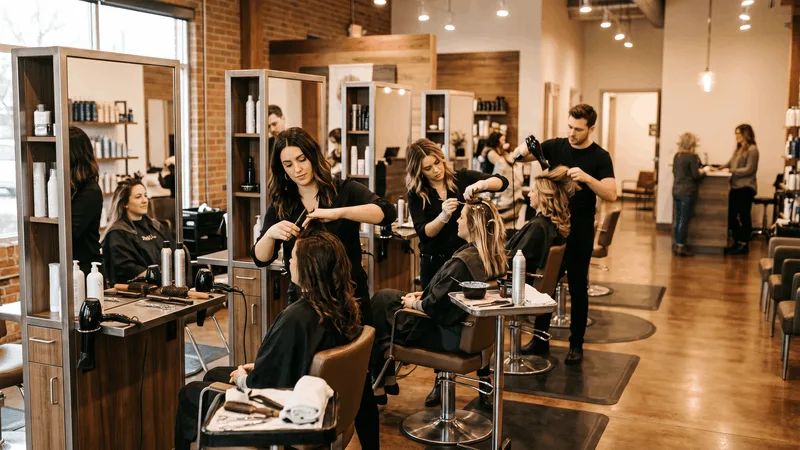
This is the step most shops skip entirely, and it's the one that matters most in a booth-rental shop. If every review request goes out under a generic "thanks for visiting us" message, you're treating five different stylists' five different skill sets as one undifferentiated experience. Tag every appointment to the stylist who actually did the work, and let that tie follow the request through to the review.
You don't need the client to mention the stylist by name in the review itself, and you shouldn't ask them to. Telling a client what to write crosses into the kind of review manipulation Google's policies prohibit, and it reads as scripted even when it isn't. What you can do is make sure the request itself, and any internal tracking behind it, knows which stylist earned the ask. A reviewer who genuinely loved their cut will often name the stylist on their own, without being told to.
For a booth-rental shop, this is also what gets independent stylists to actually care about the system instead of ignoring it. A stylist who can see that their own chair-side asks are filling their own book has a real reason to keep doing it. A stylist who only sees the shop's shared number climbing has no idea whether any of it is theirs.
Step 4: Time the Follow-Up Text for After They've Left the Chair
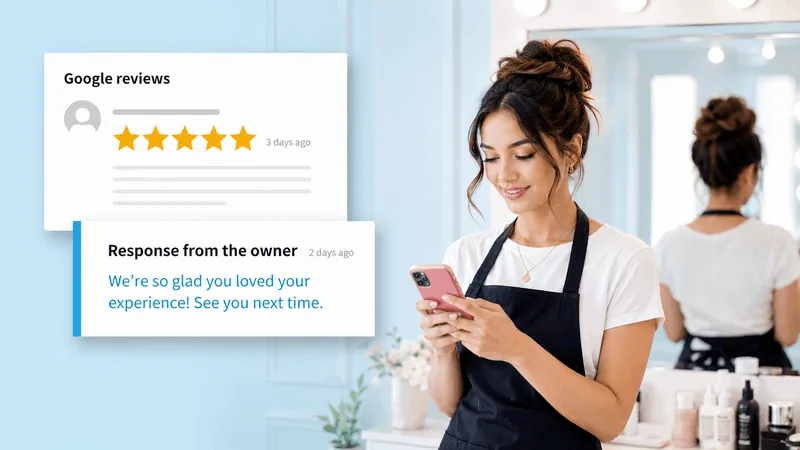
For anything beyond a quick cut, the in-chair ask only gets you halfway. The follow-up text is what catches a client after they've washed their own hair, styled it themselves on a Monday morning, and confirmed the result they fell in love with in the salon mirror still holds up in their own bathroom. Send it too early and you're asking a question the client can't actually answer yet.
The trigger should be the appointment itself, not a day picked at random. A text that fires automatically a few hours after a quick cut, or a day or two after a color service, beats a Friday batch send to everyone who visited that week, because the request still feels tied to their specific appointment instead of a mass message. Clienzo, for example, can fire that text the moment an appointment is marked complete and route it on a delay that matches the service, so a barbershop cut and a balayage don't get the same timing by default.
Keep the message itself short and specific to the visit: "Hi Maria, it's [Stylist] from [Salon]. Hope you're loving the color! If you have a minute, we'd love a quick Google review." A message that names the stylist and the service reads as a real follow-up from a person, not a template blasted to a list.
Step 5: Watch Which Stylists' Requests Are Actually Converting

Once requests are tagged by stylist in step 3, you can actually see who's converting and who isn't, instead of guessing. A stylist whose clients almost never leave a review usually isn't getting worse results than everyone else; they're just not mentioning the ask at the chair, or they're mentioning it so quickly and quietly that the client forgets by the time they're in the car.
Check this monthly, not weekly. A slow week for one stylist doesn't mean anything on its own, but a stylist who's consistently behind every other chair, month after month, usually has a coaching conversation waiting: maybe they need a script for how to mention it naturally, maybe they're skipping it on busy days, maybe the chair-side card at their station is missing or out of date.
This is also where the booth-rental dynamic helps you instead of working against you. Stylists who rent their own space and see their own numbers tend to want to fix this themselves once they understand the connection between the ask and their own bookings. You're not nagging them to do a chore for the shop; you're showing them a lever for their own income.
Step 6: Set a Cadence for Regulars So the Ask Doesn't Wear Thin

A client who comes in every six weeks for a root touch-up doesn't need a review request every six weeks. Asking the same regular repeatedly starts to feel less like genuine appreciation and more like a chore they're being assigned, and it's one of the fastest ways to get a client to start ignoring your texts altogether, including the ones that matter.
A simple rule works well here: ask new clients after their first visit, ask regulars once or twice a year, and always ask after any appointment that's visually dramatic, like a big color change, a dramatic cut, or an event style, regardless of how recently you last asked. Those are the appointments most likely to produce a review with a specific, photo-worthy result, which is exactly the kind of review that convinces the next new client to book.
If a regular already left a glowing review eight months ago, let that one keep working for you instead of chasing a second one. Their existing review is still doing its job every time someone scrolls through your profile. Spend the ask on the client who hasn't left one yet.
Common Mistakes to Avoid
- Asking a color or chemical client before they've washed it at home. The peak moment for these services happens a day or two later, not at checkout. Asking too early gets a lukewarm response, or none.
- Sending one generic request with no stylist attached. A shop-wide "thanks for visiting" message gives independent stylists no reason to participate and misses the chance to attribute results to the person who earned them.
- Telling clients exactly what to write or which stylist to name. This crosses into the kind of review manipulation Google's policies prohibit, and most readers can tell when a review sounds scripted anyway.
- Offering a discount in exchange for a review. Incentivized reviews violate Google's terms and put your entire profile at risk if flagged, not just the one review.
- Forgetting walk-in or quick-cut clients because they're not in the same booking system as color clients. A barbershop's busiest, most loyal clients are often the ones least likely to be tracked anywhere, which means they're also the ones most likely to get skipped entirely.
- Asking the same regular every single visit. It wears the relationship thin faster than it grows the review count, and it risks the client tuning out future texts that actually matter.