
Why This Matters
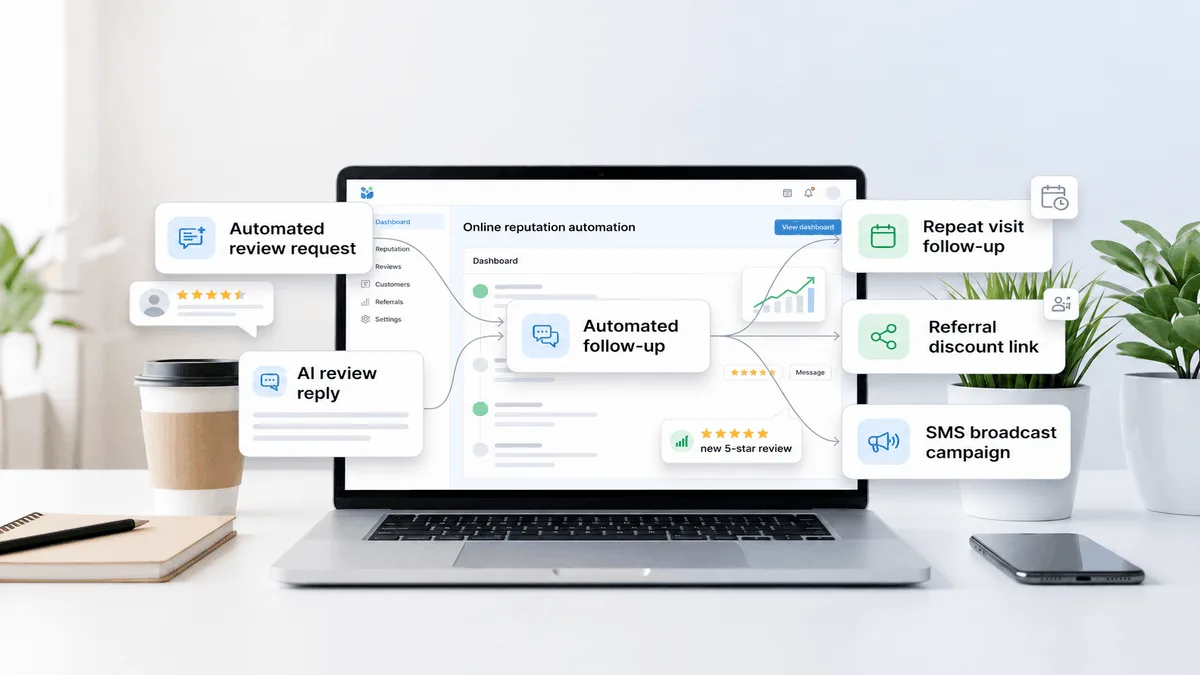
Your online reputation doesn't grow from one clever campaign. It grows from five small, boring touchpoints firing on their own, every single time, instead of whenever you remember to do them. Most local businesses run one of these well (usually review requests) and let the other four happen by accident, if at all.
Here are the five that actually move the needle, the order to build them in, and what each one is doing for you while you're busy running the business.
Picture two auto shops on the same street. Both do solid work. Both get a steady trickle of five-star reviews because customers leave happy. One owner stops there: reviews come in, sometimes get a "thanks!" reply, and that's the whole system. The other owner has the same reviews triggering an AI-drafted reply within the hour, a check-in text eleven months later when the next oil change is due, and a referral link the moment that customer rebooks. A year later, the second shop has the same review count but twice the repeat business and a slow steady stream of new customers who showed up because a friend forwarded a text. Same starting point, very different outcome, because four touchpoints were doing work the first shop left on the table.
Be honest with yourself about the time this takes. Setting up all five properly is a few hours of work, not a weekend project, but it's spread out: an hour to wire up review requests, twenty minutes to turn on AI reply suggestions once those requests are flowing, another hour a few weeks later for repeat nudges once you know your typical customer's return window. Nobody builds all five on day one, and trying to is how the project stalls before any of it ships. Build the first one, let it run for a few weeks, then add the next.
1. Automated Review Requests, Sent the Same Day
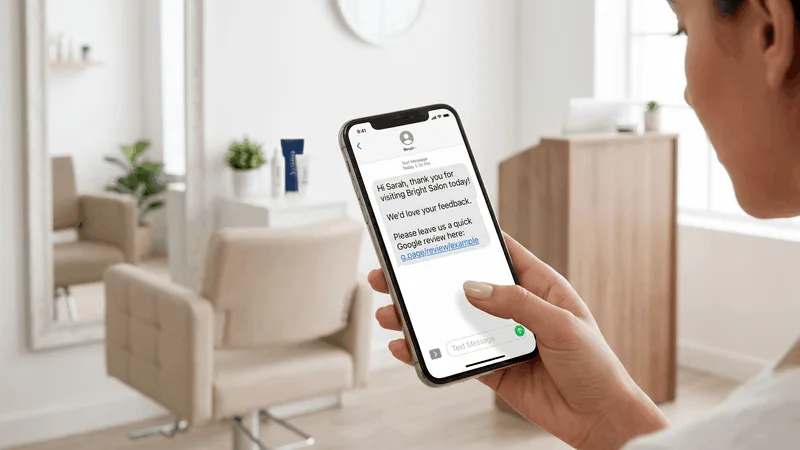
This is the touchpoint everything else depends on, so it goes first. The moment a job, appointment, or order is marked complete, a text or email goes out asking for a review, with a direct link that takes two taps. Not a batch sent every Friday. Not a sticky note on the register asking people to "leave us a review." The same day, while the haircut still looks good or the leak is actually fixed.
A landscaping crew that texts the link from the truck before pulling out of the driveway will out-earn a competitor's monthly email blast almost every time, because the ask lands at the moment the customer is happiest, not whenever the owner gets around to sending it. Set this up once and it runs on every job from then on, which is the only way review counts climb instead of plateau.
Text tends to beat email for this one, simply because most people read a text within minutes and a marketing email within days, if at all. Clienzo, for example, can send the request by SMS, email, or an in-app prompt depending on what a business already collects from customers, and fire it automatically the moment a job status flips to complete. The owner never has to remember to send anything, which is the entire point: a habit that depends on memory eventually breaks during a busy week, and a busy week is exactly when you need the next review most.
"Same day" means something different depending on the business. For a haircut or a repaired AC unit, that's within the hour, before the customer's even back in the car. For something like a kitchen remodel or a multi-week consulting project, same day means the day the final invoice is paid, not the day work technically wrapped, since that's when the customer's relief and satisfaction actually peak. Match the trigger to the moment your specific customer feels the most relief, not to a generic "job complete" checkbox that might fire a week before they've even seen the finished result.
2. AI-Drafted Replies, So Every Review Gets Answered
Once the requests in step one are working, you'll have more reviews coming in than you had time to handle before. This is where most owners fall behind: it's easy to respond to Google reviews the week they land, harder to keep up once the count climbs, and a great review sitting unanswered for a month looks the same to a stranger as a bad one nobody bothered to address.
AI reply suggestions fix the bottleneck without making the replies feel robotic. The system reads the review, drafts a reply that references what the customer actually said, and you approve it with one tap from your phone between appointments. A two-star review about a late arrival gets an apology and a specific fix, not a generic "we value your feedback." A five-star review gets a real thank-you instead of silence. The reply itself is what future customers read before they book, so speed and specificity here do more for your reputation than the star rating alone.
Think about how you actually use Google Maps when you're the one searching for a plumber or a dentist. You don't stop at the star rating. You open the reviews, skim a couple, and then check whether the business replied to the bad one. A thoughtful reply to a frustrated customer, posted within a day, tells a stranger more about how this business handles problems than ten more five-star reviews would. That's the trust signal a fast, specific reply is actually selling, and it's the reason this touchpoint earns its place second on the list, right after the reviews themselves start flowing.
One distinction worth keeping straight: AI-drafted doesn't mean auto-posted. The draft shows up for you to read, tweak if the AI missed something only you'd know (a regular customer's name, an inside joke from the appointment), and approve before it goes live. That extra ten seconds is what keeps every reply sounding like the actual person who runs the place, not a script, which matters just as much as answering quickly in the first place.
3. Repeat-Visit Nudges, Timed to When Customers Actually Come Back
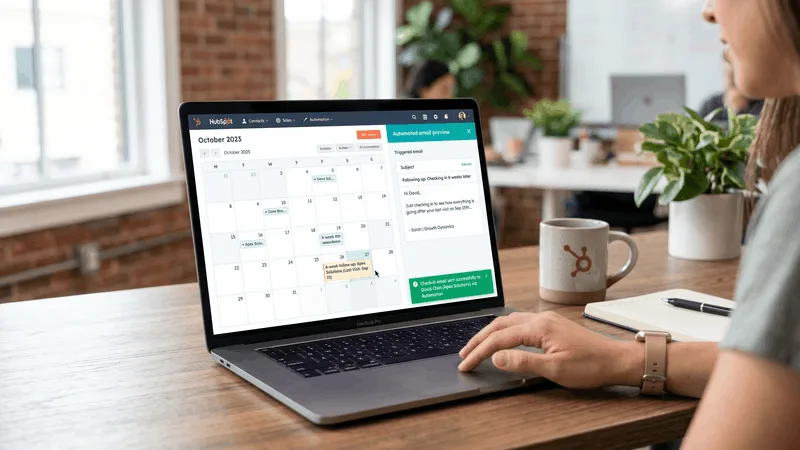
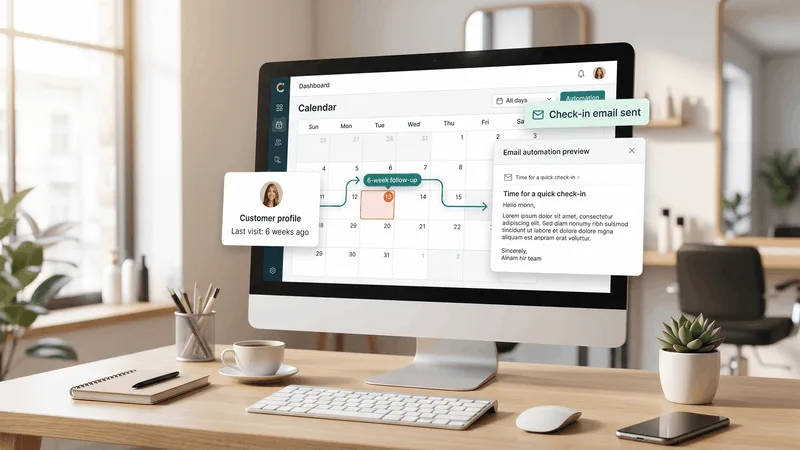
A happy customer with a glowing review still won't rebook on their own. They mean to. Then three months pass and they've forgotten which salon, which HVAC company, which dentist they liked. This touchpoint closes that gap with a short, automated check-in timed to how long that type of customer usually waits before needing you again.
A hair salon might nudge six weeks after a color appointment. An HVAC company might nudge eleven months after a tune-up, right before the next one's due. The message isn't a sales pitch, just a friendly "due for a visit?" with a one-tap way to book. This is marketing automation doing the one thing a busy owner can't: remembering every single customer's timeline at once.
Skip this one and the cost shows up slowly, which is what makes it easy to ignore. A dental hygienist doesn't lose a patient the day they miss a cleaning. They lose them eight months later when a different practice's reminder postcard arrives first, and the patient figures "might as well switch, it's been a while anyway." Nothing dramatic happened. The relationship just went quiet long enough for someone else to fill the silence. A timed nudge is cheap insurance against exactly that kind of slow, invisible churn.
4. Referral Asks Sent Right After a Repeat Booking
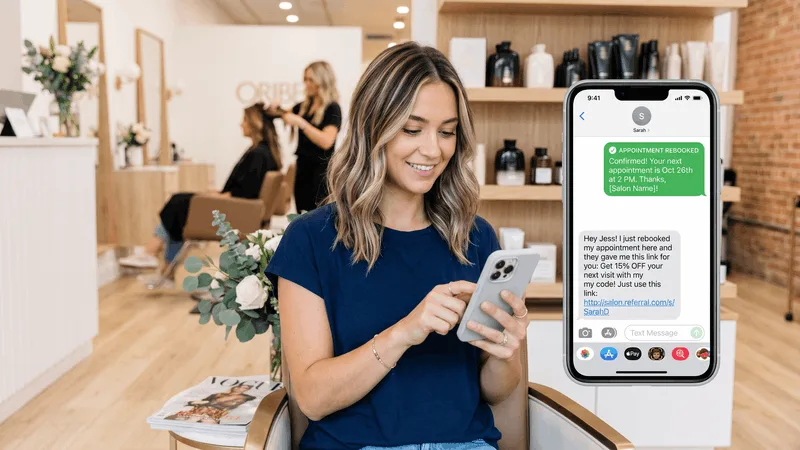
A customer who just rebooked, on their own, without a discount or a nudge, is telling you something: they trust you enough to come back. That's the exact moment to ask if they know anyone else who'd like the same service, not six months later in a generic newsletter.
Timing is the entire trick here. A referral ask sent right after a repeat booking converts at a much higher rate than the same ask sent cold, because the customer is already feeling good about the decision they just made. Keep the ask small: a simple link to share, maybe a small thank-you for both sides. People who come in through a friend's recommendation tend to stick around longer and spend more over time than people who found you through an ad, so this touchpoint is worth automating even though it's easy to skip.
Skip the formal referral program with codes, tiers, and a landing page nobody visits. A coffee shop doesn't need a points system to get word-of-mouth moving; it needs one text, sent at the right moment, that's easy enough to forward in ten seconds while a customer is still standing at the counter. The simpler the ask, the more often it actually gets shared, and a shared text beats an unused punch card every time.
You don't need a fancy dashboard to know if this is working. Watch two things: how many new customers mention a specific person's name when they book ("Maria sent me"), and whether your repeat customers are the ones sharing it at all. If referral links only ever get clicked by first-time customers, the ask is going out at the wrong moment. Move it later, closer to the second or third visit, when trust has actually had time to build.
5. Broadcasts for the Weeks the Other Four Don't Cover
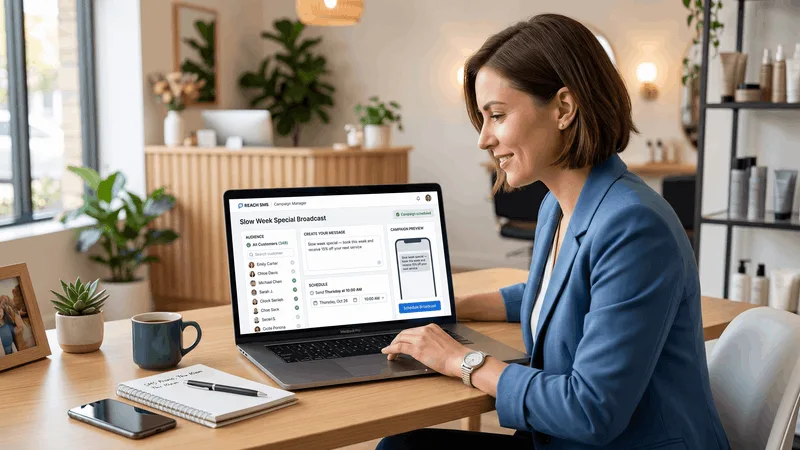
The first four touchpoints are all triggered by something a specific customer did: a finished job, a new review, a rebooking. Broadcasts are the one touchpoint you trigger yourself, for everyone at once, when business is slow and you need to fill the calendar rather than wait for a trigger to fire.
A restaurant might send an SMS marketing blast about a Tuesday happy hour to its full list a few hours before doors open. A dentist's office might broadcast a reminder that flu season means full appointment books, so customers should grab a cleaning slot now. Use this one sparingly, maybe once or twice a month, since a list that gets texted every other day starts opting out fast. It's the release valve, not the daily driver.
Segment it if you can. A loyalty-card regular and a customer who came in once two years ago don't want the same message at the same frequency. Send the regulars the happy-hour text every time; send the one-timer something closer to a "we miss you" a few times a year. A single list blasted indiscriminately is how a useful touchpoint turns into the reason people unsubscribe from everything else you send too.
Key Takeaway: Build Your Online Reputation in This Order
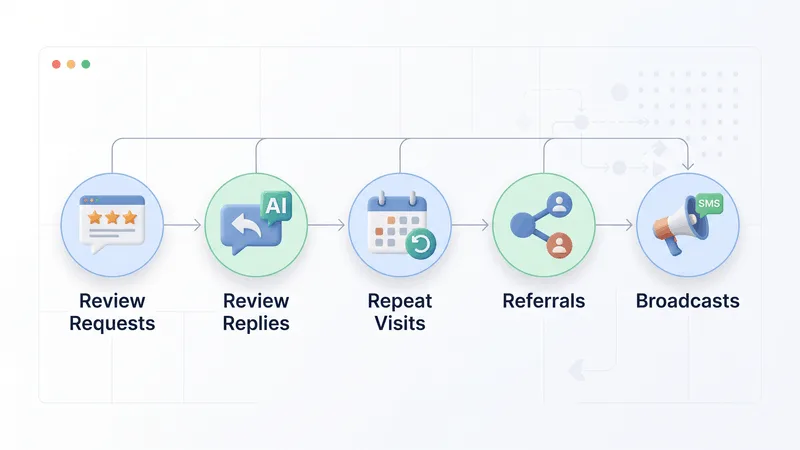
If you only have time to build one thing this month, build the review request. It feeds every other touchpoint on this list: more reviews means more replies to write, a steadier flow of happy customers to nudge back, and a bigger pool of repeat customers to ask for referrals. Skipping straight to broadcasts without the first four in place is why so many mass texts feel like noise instead of growth.
None of these five need to be perfect on day one. Reputation management for businesses works best as five rough systems running together, not one flawless review-request flow and nothing else. Build them in order, let each one feed the next, and the system keeps working even on the weeks you don't have time to think about it.
The reason most local businesses never get past touchpoint one isn't a lack of ideas. It's that each piece usually lives in a different app: review requests in one tool, replies done manually on a laptop, rebooking reminders nowhere at all. Running all five from a single dashboard instead of five separate logins is what makes it realistic to actually keep up with them, instead of just the one you started with.